Personalization
A parametric model generates a different file for every order from what the buyer typed, like a name keychain or a door sign.
What it does
Templates with limits
Each template declares its fields: a text with a character limit, fonts from a list, colors from the loaded materials. If the golden sample passes the worst case, any allowed value comes out right.
The values come from the store
In Shopify they travel as line item properties. A block on the product page shows the fields and a preview.
QC against the preview
Each personalized piece is checked against its order's preview, and the generated file is stored with the job.
Where it fits in the flow
It changes the model: instead of a fixed file, a template that generates each job's file.
- Store
- Model (part of this product)
- Golden sample
- Jobs (part of this product)
- Quality check (part of this product)
- Shipping
Today and what's next
What works today
- Orders keep each piece's personalization details.
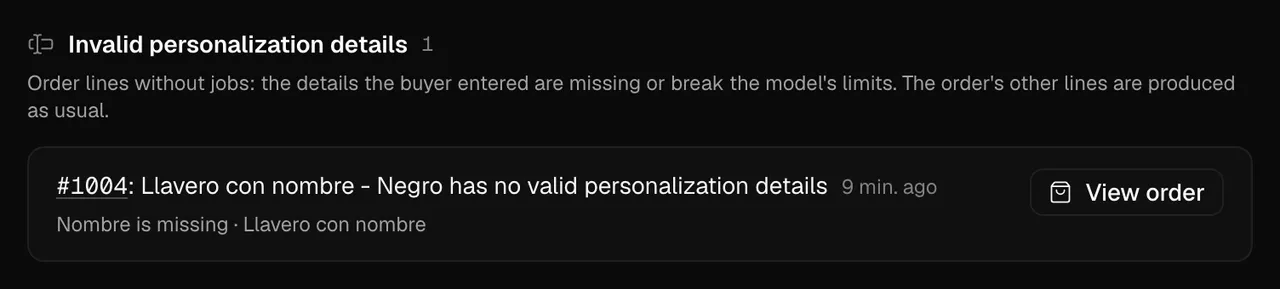
- If details are missing or out of limits, the order waits with an alert instead of printing wrong.
What's coming
- The file generator that works from the template.
- The store block with the fields and the preview.
- Filters for offensive words and trademarks before generating.
Other products
- PlatformIn the first release
Connect Shopify, upload each model once, and every sale reaches the workshop as one job per piece, with its file, its material and its status.
- APIComing soon
Send a file and an address, and Craftshop prints it, checks it and ships it, notifying you by webhook at every stage.
Start with what works today.
You create your brand, choose who prints and connect Shopify. What's coming joins the same account, without changing how you work.